
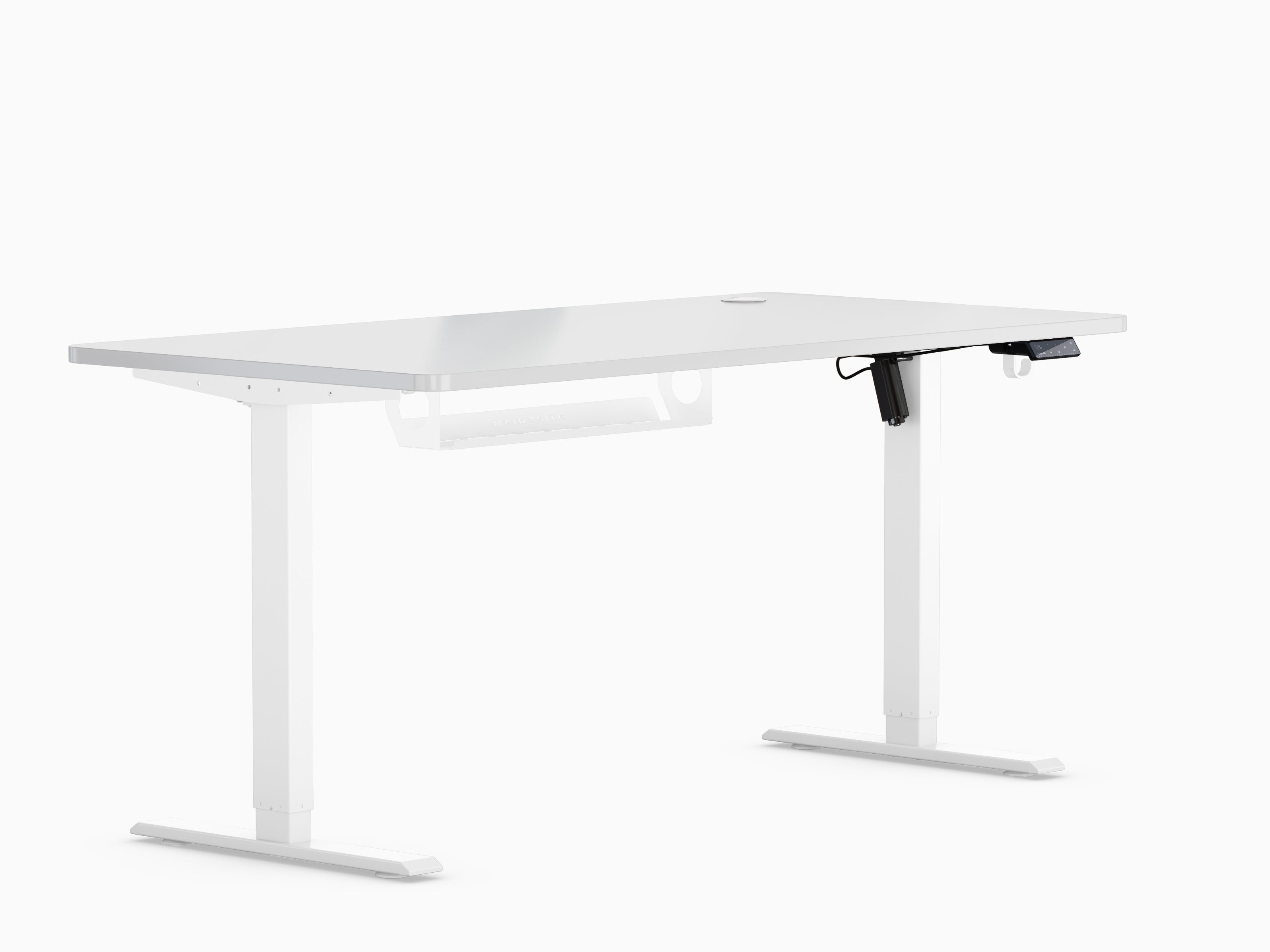


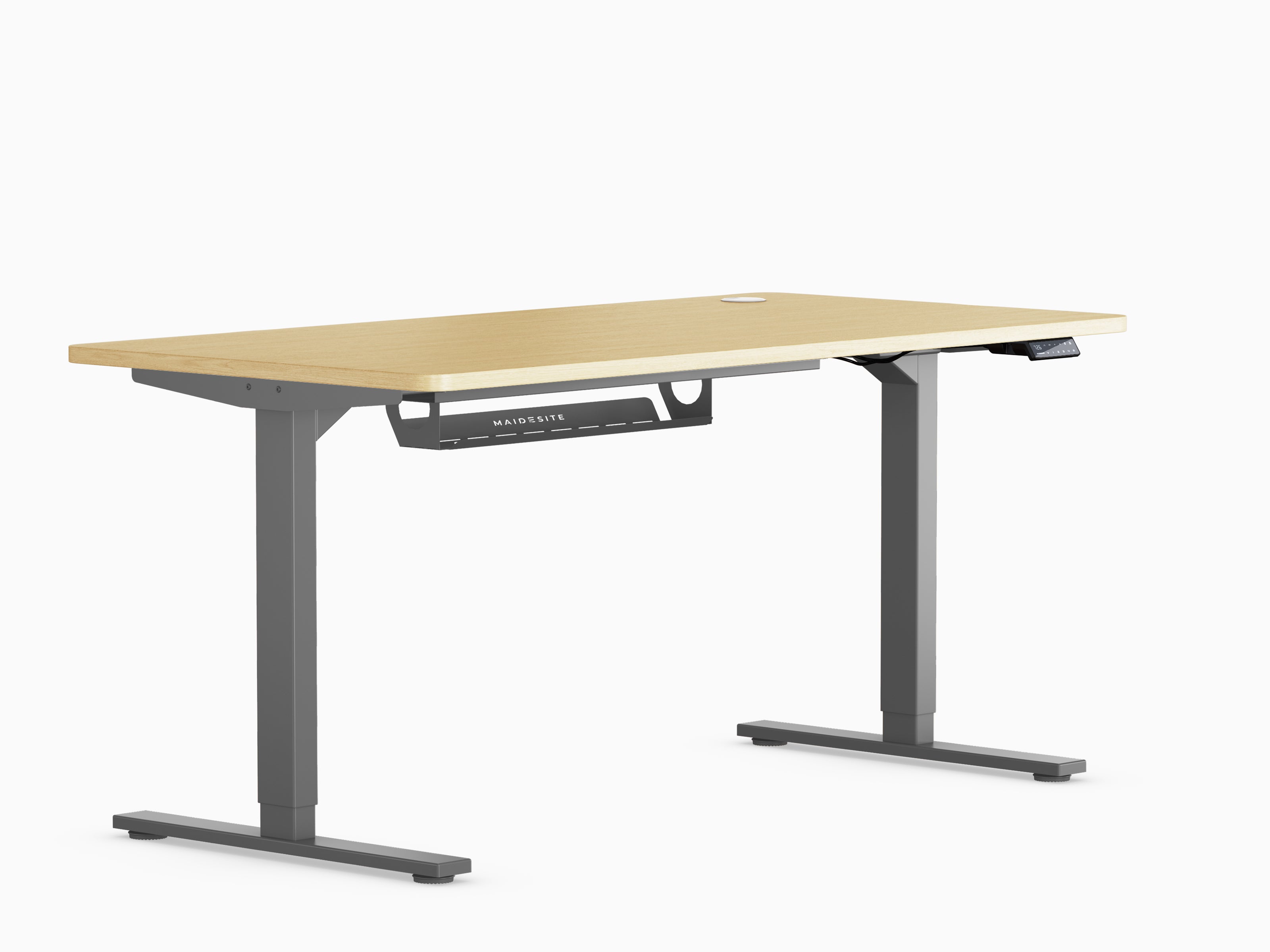
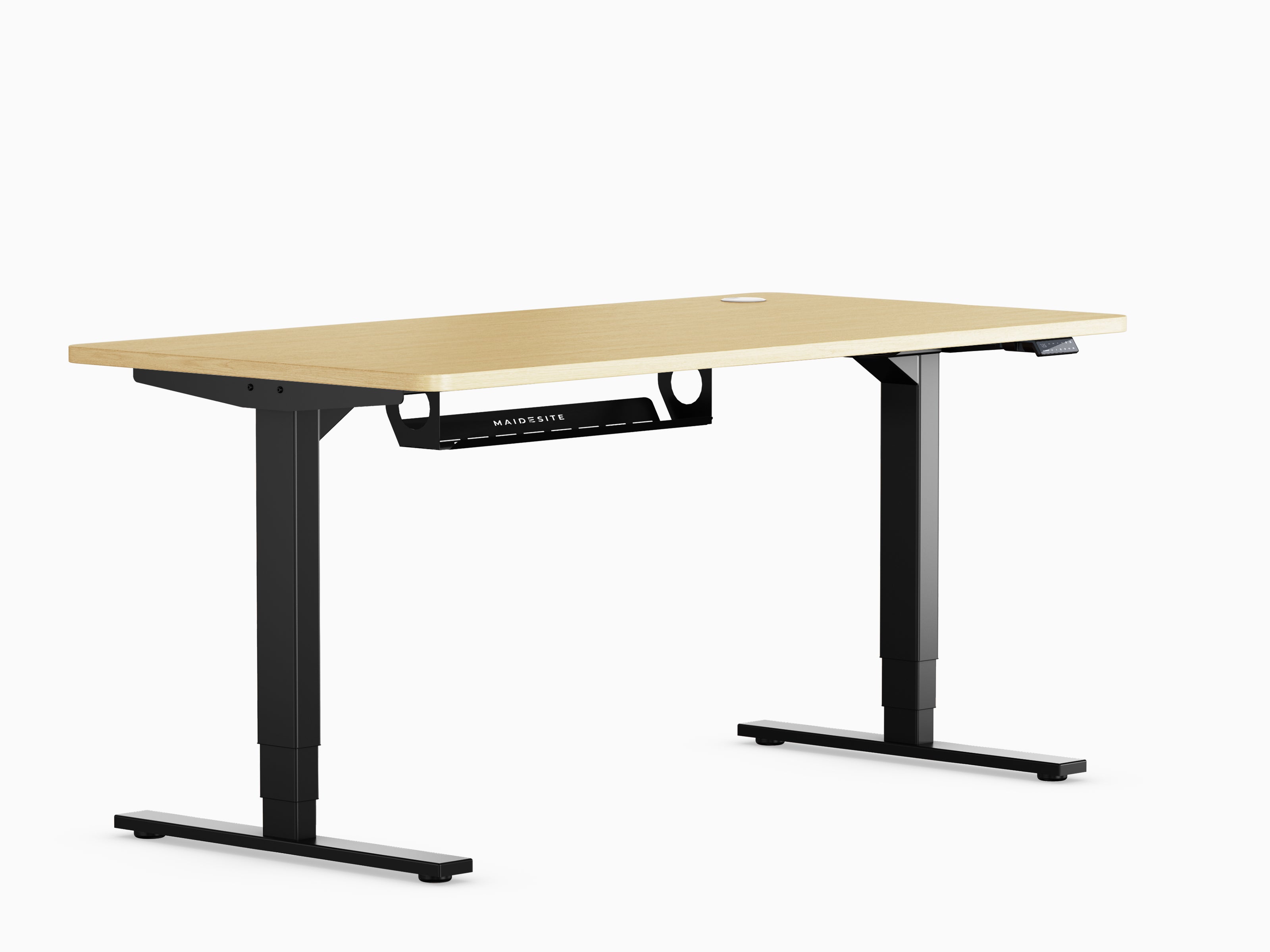
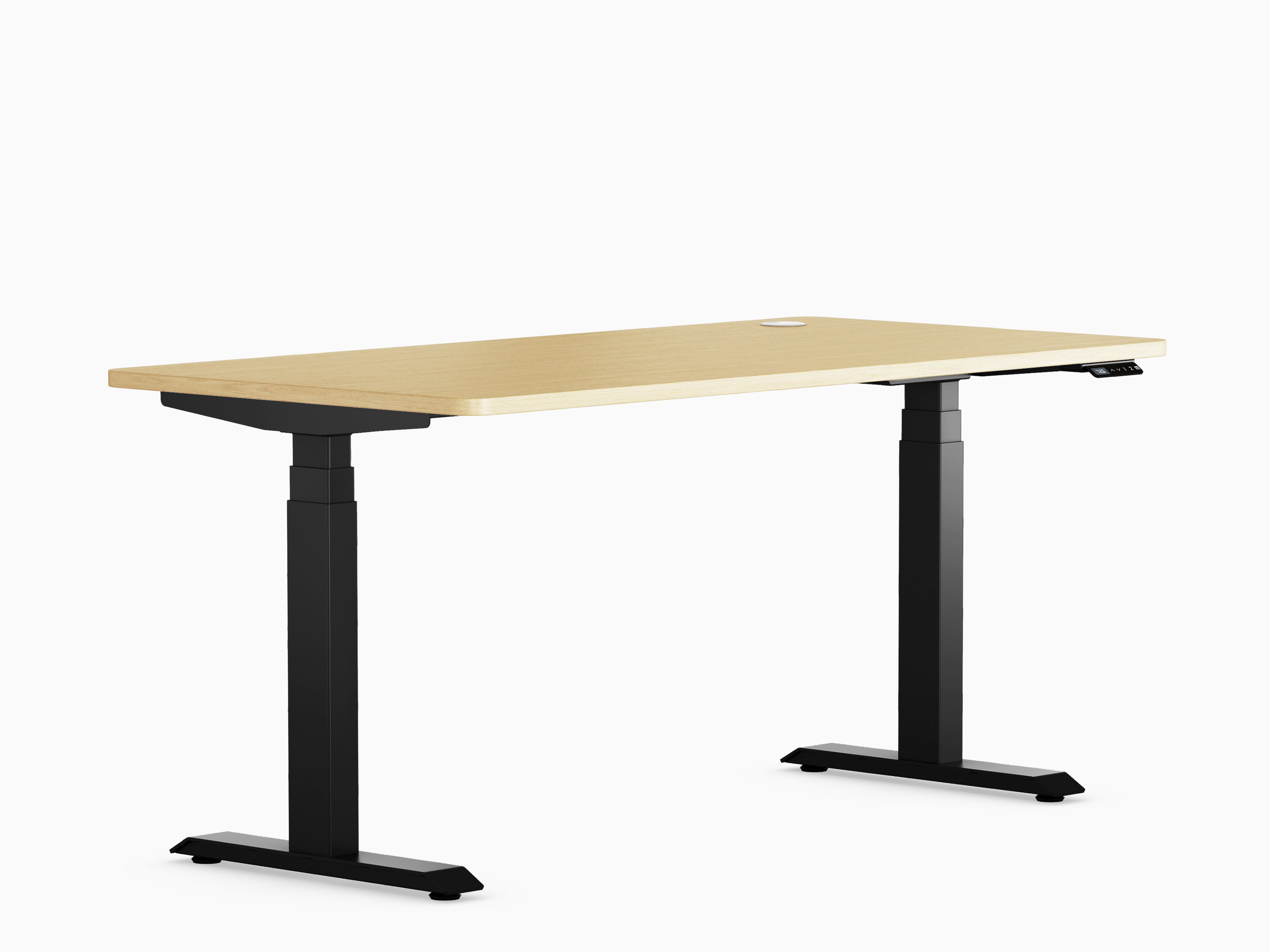







Staying fit in the office: How height-adjustable desks reduce sick days

Why prolonged sitting makes you sick
If you sit all day, your back will eventually give out. The intervertebral discs become compressed like an old sponge, and the blood doesn't circulate properly. But getting up every now and then gives your bones and muscles the necessary rest.
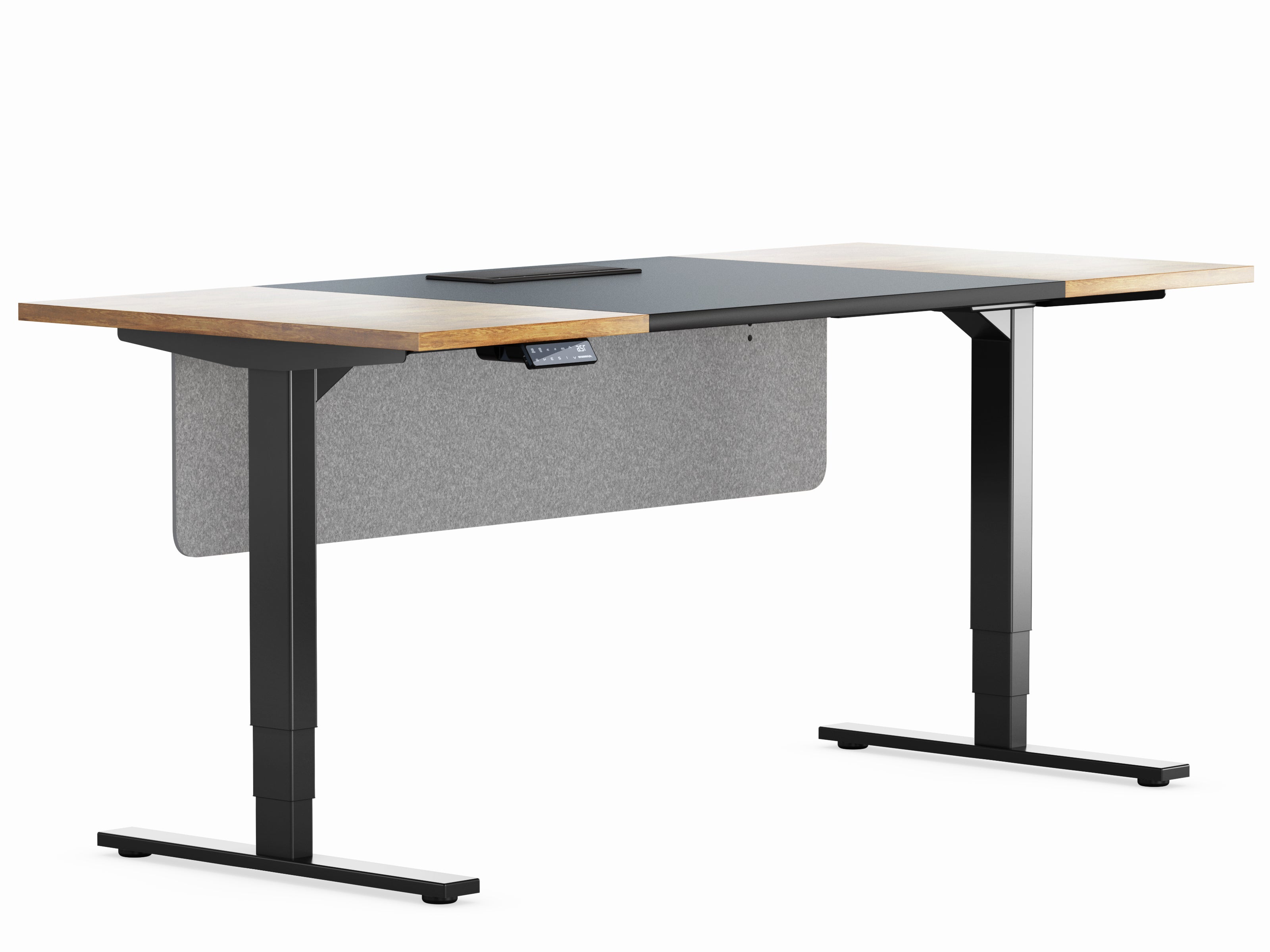
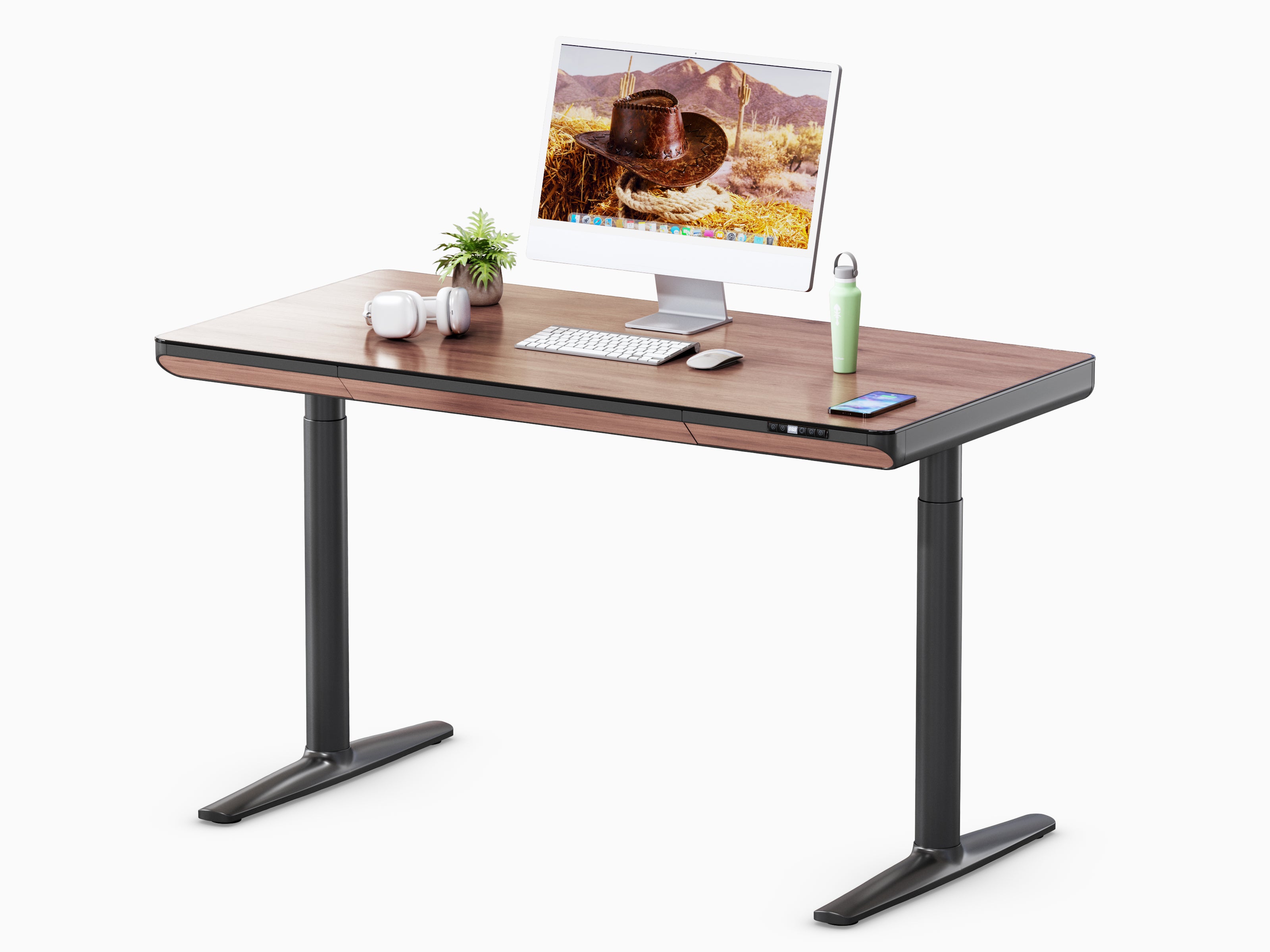
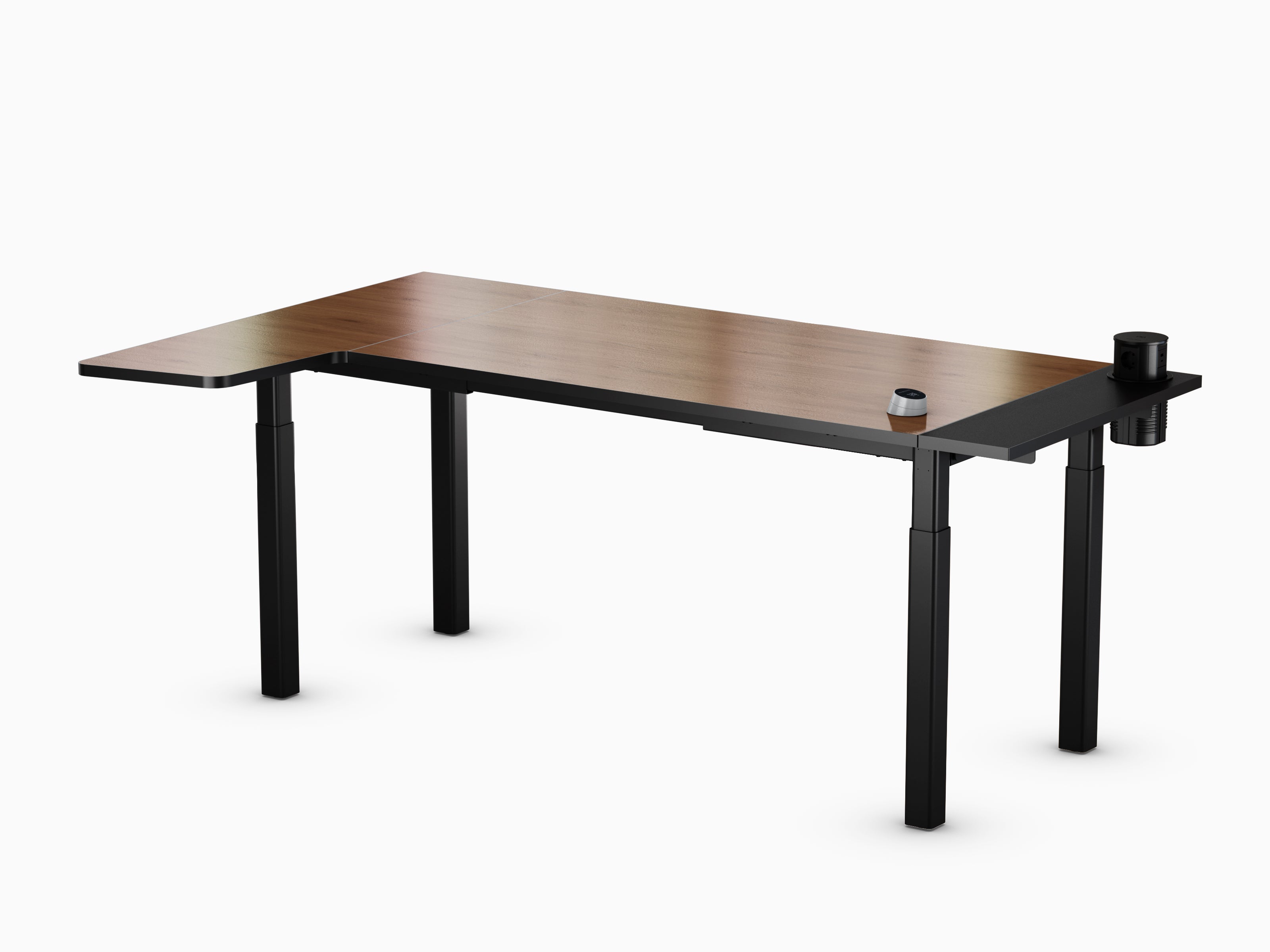
Height-adjustable desks prevent the body from becoming stiff from sitting for hours.
The problem in German offices
In many companies, employees are absent for weeks due to neck pain or lumbago. This costs companies a lot of money. The remaining colleagues have to take on the extra work, which in turn leads to more stress and overload.
This happens much less often with a height-adjustable table because you are constantly changing your posture.
The most important health benefits
Less back pain and tension
You notice it immediately after working standing up for half an hour. The spine is stressed differently, and the muscles in the lower back have to actively work. This prevents everything from cramping up and leaving you feeling like a question mark when you get up from your chair in the evening.

Many people talk about their constant massages and physiotherapy. But the solution often lies in not becoming so rigid in the first place. A height-adjustable desk is like insurance against nasty muscle tension that can otherwise develop into serious illnesses.
Improved circulation and more energy
A huge advantage is that you stay much more alert while standing. When your circulation stays up, you feel fitter overall and are less likely to catch every cold going around the office. A healthy body simply fights off illness better when it's not stuck in energy-saving mode all day.
The typical afternoon slump? Significantly less frequent with a height-adjustable desk.
Deeper breathing for better concentration
It might sound strange, but when you stand up, you automatically breathe more deeply. This brings more oxygen to your lungs and brain. It really helps with those dull headaches you often get when you're hunched over a keyboard for hours.
People who have fewer headaches need fewer pills and are less likely to stay home due to migraines.
Height-adjustable desks reduce sick days

The alternation between sitting and standing
The best part is that you don't have to do much at all – just press a button every now and then. It's not strenuous exercise, but these small movements spread throughout the day make a huge difference in the end. When you have less pain, you're also more motivated to go to work in the morning instead of struggling through it with painkillers.
The real magic lies in the interplay: sometimes sitting for concentrated work, then standing again for phone calls or meetings.
Less one-sided strain
The rotation engages different muscle groups, allowing other muscles to rest. This prevents the one-sided strain that is almost always the cause of long periods of illness in the office.
It's actually quite logical when you consider how people used to move around – namely, constantly.
Improved immune system through activity
This evening fatigue is often a sign that the body is under-stimulated while sitting. Metabolism slows down. But when you get up from your desk, you signal to your system: Now it's time to be active! This keeps the immune system working and helps reduce the likelihood of calling in sick due to general exhaustion.
Many people think standing is tiring – but the opposite is true if you do it correctly.
Practical tips for everyday work
How often should you change your position?
Experts recommend alternating between sitting and standing every 30 to 45 minutes. You don't have to stand for long – even 10 to 15 minutes makes a big difference. The point isn't to stand all day (that would also be unhealthy for your joints), but to change your position regularly.
Simple rule: New task = new mode. When you start a new activity, raise or lower the desk.
Finding the right attitude

Working while standing:
- Elbows at a 90-degree angle
- Screen at eye level
- Relaxed shoulders
- Distribute weight evenly on both legs
Working while seated:
- Feet flat on the floor
- thigh horizontal
- leaning back
- Arms resting loosely on the tabletop
Getting used to it takes time.
At first, your legs might get tired after standing for ten minutes. That's perfectly normal. It will quickly subside once your muscles remember what they're for. After a few weeks, you won't want to give up your adjustable desk.
It's truly fascinating how much quality of life you regain when you no longer come home with a sore back.
The numbers speak for themselves.
Fewer absences, more productivity
Looking at the figures, it's clear: employees are absent less often in departments with height-adjustable desks. This isn't a coincidence, but rather the result of improved blood circulation and reduced pressure on the joints. People who feel comfortable at work stay healthy and enjoy their jobs more.
Studies show:
- Up to 32% less back pain
- 54% less neck and shoulder pain
- Significantly fewer absences due to illness
- Increased satisfaction and motivation
The bill for employers
If the boss is smart, he'll provide everyone with a height-adjustable desk. He knows: Healthy employees are worth their weight in gold. There's no point in skimping on equipment if people end up spending half the year at the doctor's.
The cost-benefit analysis:
- Purchase price: 400-1,500 euros per table
- Average sickness costs per employee: 3,000-5,000 euros/year (15.1 sick days on average in2023 , average full-time salary 4,634 euros , that's 178-200 euros per day, 15.1*(178-200/)=2,687.8-3,020 euros/year)
- Savings due to fewer sick days: noticeable as early as the first year
Ultimately, it's more relaxing for everyone if you can adjust your workplace to suit what feels best at any given moment.
Positive effects on the entire team

Improved atmosphere in the office
In today's modern office, standing at the desk is almost as normal as drinking coffee during breaks. It's becoming increasingly common to see colleagues chatting while standing. This is also great for team morale.
A good mood reduces psychological stress – and stress is often the cause of many absences.
More energy after work
You feel more alive and even have energy for sports, family, or hobbies after work. Those who only sit are often so exhausted in the evening, as if they'd been hitting stones – even though they only sat in an armchair. This extreme fatigue disappears with an active workday at a height-adjustable desk.
You simply don't come home with a sore back anymore.
Frequently asked questions about height-adjustable desks
Isn't standing tiring for the legs?
It might be a little uncomfortable at first, because your muscles aren't used to it. After a few days, your body will have adapted. The important thing is to alternate – don't stand for hours at a time.
How long should I stand continuously?
Start with 10-15 minutes and gradually increase. The ideal distribution: 60% sitting, 30% standing, 10% active movement (e.g., walking to the printer).
Is this also worthwhile when working from home?
Absolutely! Especially when working from home, the temptation is great to stay in the same position all day. A height-adjustable desk is particularly valuable for your health in this situation.
How much does a good height-adjustable desk cost?
Solid electric models start at €400. Premium tables cost between €800 and €1,500. Manually adjustable versions are cheaper (starting at €200), but less convenient for everyday use.

Your next step: Simply try it out.
Investing in a height-adjustable desk is worthwhile for every individual and for the entire company. Everyone simply stays fitter and more motivated. It's essentially one of the simplest solutions to a huge problem in our modern workplace.
Start today: If you already have a height-adjustable desk, get into the habit of changing your position for each new task. This way, you won't even be tempted to stay seated all morning.
If not: Talk to your employer about the health and economic benefits. Many companies support the purchase or cover the costs completely.
Your health will thank you – and your back even more so.

