
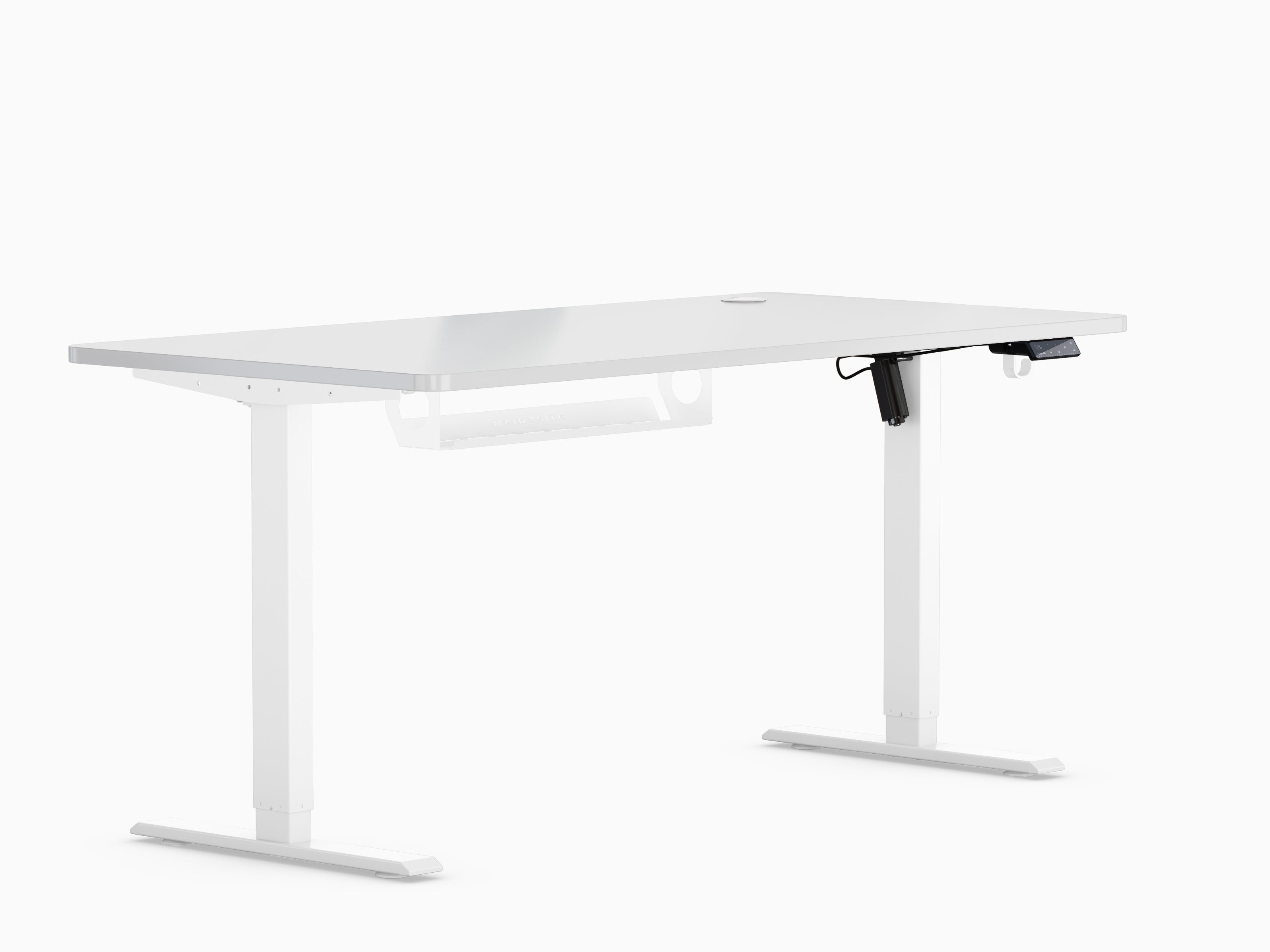


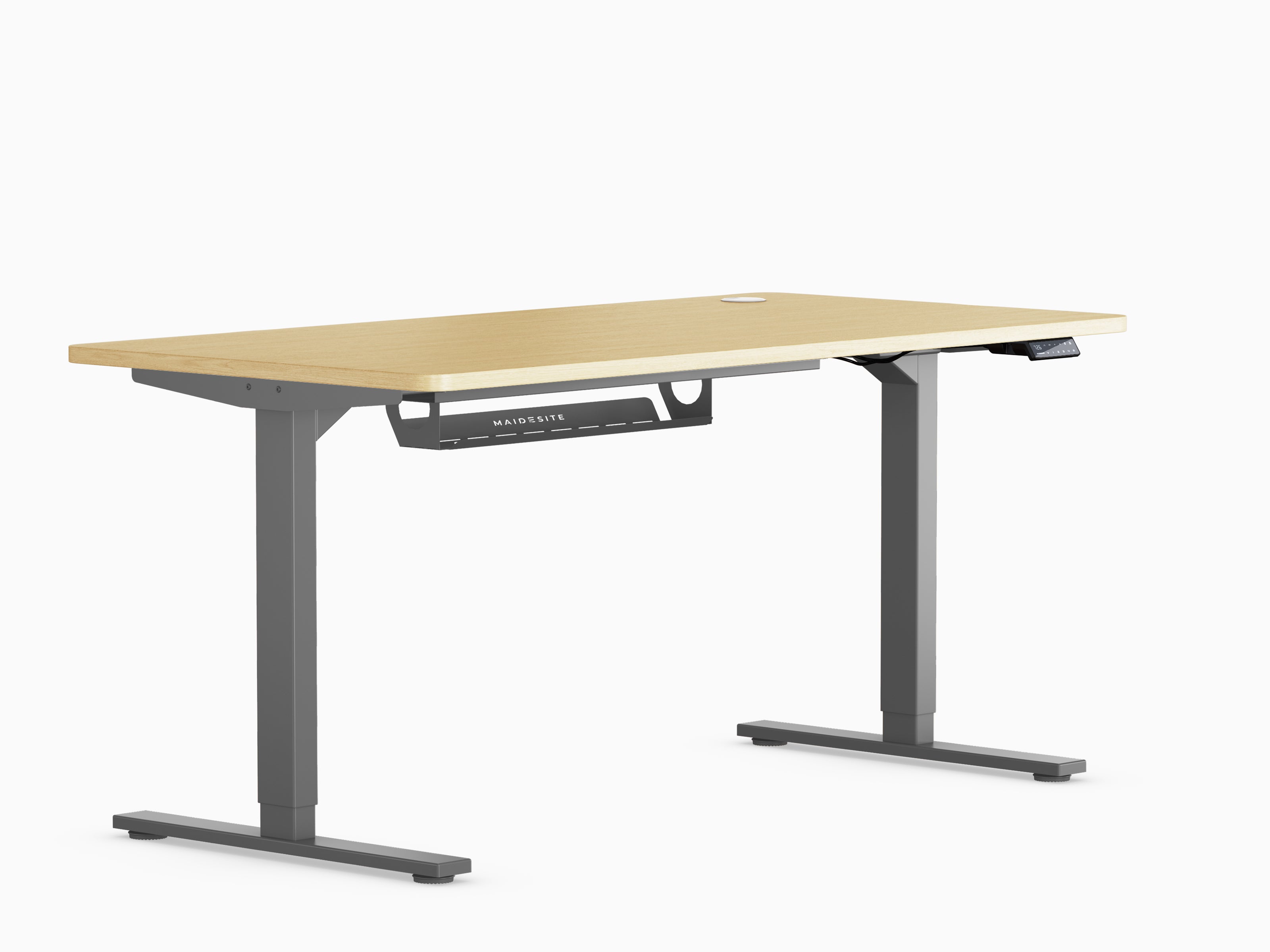
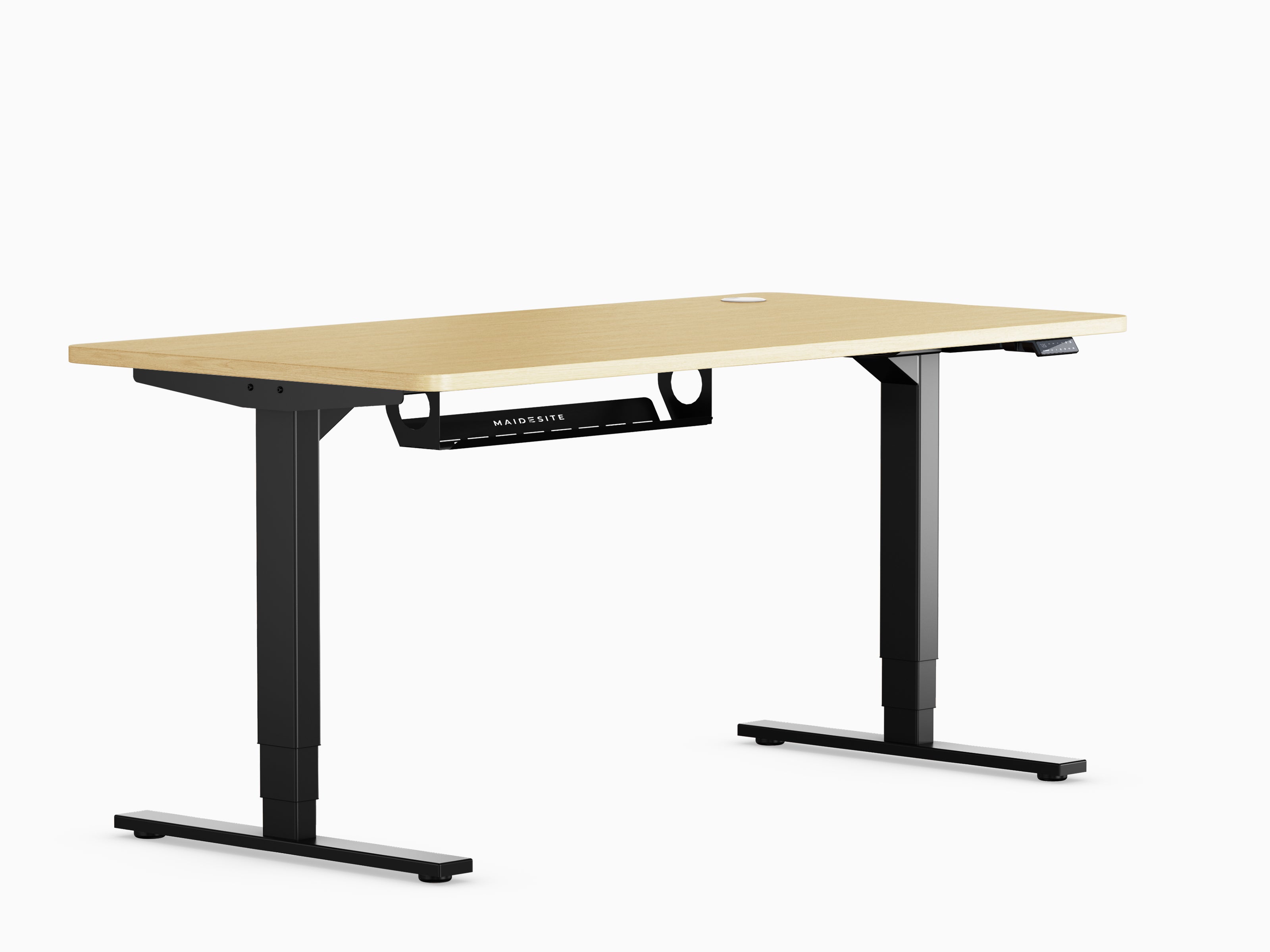
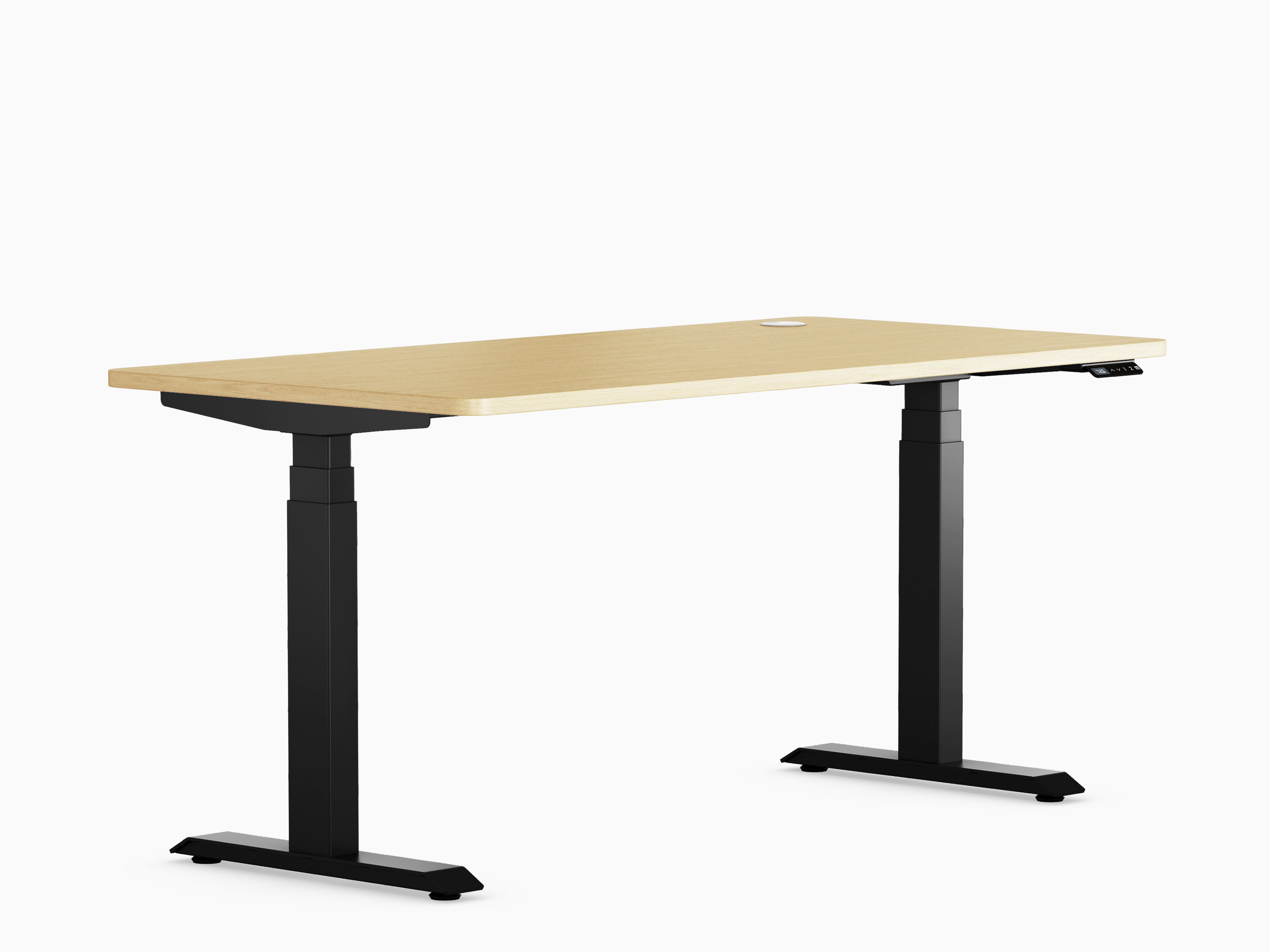








Height-adjustable desks at work: Who actually pays for them?

Two weeks ago, we discussed in a blog post who bears the costs of a height-adjustable desk in Germany ; we will delve deeper into this topic.
Back pain, tension, and concentration problems are daily companions for many office workers. One possible solution: a height-adjustable desk . But what many don't know is that in certain cases , health insurance companies, pension funds, or employers cover the costs . We'll explain how this works and when you're entitled to it in this article.
Why height-adjustable desks are more than just a trend
A height-adjustable desk is more than just a modern piece of furniture. It actively contributes to workplace health. Being able to switch between sitting and standing keeps you moving – even during the daily office routine.
Changing positions relieves pressure on the spine and intervertebral discs, promotes blood circulation, and has a positive effect on concentration. Many employees report less back pain, improved energy levels, and an overall increase in well-being.
In addition, dynamic working can reduce the risk of typical office ailments such as postural problems, neck tension, or even cardiovascular issues. Investing in a height-adjustable desk therefore pays off in the long run – for body, mind, and even work performance.

Health problems as a prerequisite
A height-adjustable desk isn't usually covered by insurance. The key question is: Is it medically necessary? If you can no longer work at a regular desk due to back problems, a herniated disc, scoliosis, or other orthopedic limitations, your chances of having the costs covered increase significantly.
The first step is a doctor's certificate. This should clearly state that a height-adjustable desk is medically necessary. Ideally, it should also explain which symptoms might be exacerbated without the desk. This certificate forms the basis for all further steps – whether with the employer, health insurance company, or any other funding body.
When the employer pays
In Germany, Austria, and Luxembourg, employers are legally obligated to provide their employees with a safe and ergonomic workplace. This includes taking health limitations into account. If a doctor's certificate confirms the need for a height-adjustable desk, the employer is required to provide one.
This applies especially if the person in question cannot work otherwise. In practice, this means: no suitable desk, no ability to work. In such cases, the employer must act – and quickly. The costs for the desk are then often fully covered.
It's worthwhile to point out any potential limitations during the job interview or at the latest during onboarding. Many companies are open and willing to find suitable solutions – not least because healthy employees are also more productive.
When the health insurance pays
Statutory health insurance only covers the cost of a height-adjustable desk in very specific cases. It's important to note that the desk must be classified as a medical aid. This is only the case if it is necessary for the treatment or alleviation of a specific illness – for example, in cases of severe spinal disorders.
Furthermore, it must not be an ordinary piece of furniture, but a specially certified medical product. A specialist doctor usually has to confirm the medical necessity. With this certificate, you can then submit an application to your health insurance company. However, approval is rare, as health insurance companies often refer applications to other responsible bodies – such as the pension insurance provider.

When the pension insurance kicks in
The pension insurance provider is one of the most important contacts when it comes to assistive devices for vocational reintegration or maintaining employability. Anyone who is at long-term risk of being unable to work due to health reasons can apply for vocational rehabilitation benefits.
In this context, a height-adjustable desk can be recognized as a technical aid. The goal of the pension insurance is to safeguard the ability to work. If the desk is deemed necessary for this purpose, the pension insurance can cover the costs – either fully or partially.
Important: The application must be submitted before the purchase. Retroactive payments are generally not possible. Approval usually takes several weeks, so it is advisable to submit the application well in advance.
The employment agency can also help.
If you are currently undergoing retraining, vocational training, or a vocational rehabilitation program, the employment agency may be responsible. Under certain circumstances, they may also cover the costs of a height-adjustable desk.
This applies especially if the table is demonstrably necessary to participate in or successfully complete a program. A doctor's certificate is also essential in this case.

How does the application process work?
Whether it's an employer, health insurance company, pension fund, or employment agency – the basis is always the same: a clearly worded medical certificate. It should contain the following information:
- Diagnosis or medical finding
- Explanation of why a height-adjustable table is necessary
- Description of the limitations without the table
- Recommendation for use during work
Statements from occupational therapists or company doctors can also be helpful. The better prepared the documents are, the higher the chances of approval.
The next step is to submit a formal application. Most funding bodies provide standardized forms for this. In some cases, a cost estimate is also required – especially for custom-made tables.
Do I have to pay in advance?
In many cases, yes. Anyone who buys a table on their own, without prior authorization, bears the financial risk. Reimbursement is usually impossible if the application wasn't submitted in advance. Therefore, it's important to be patient and wait for approval.
The situation is different if the employer purchases the table. In that case, no advance payment from the employee is required. The table is procured directly through the company.
Conclusion: It's worth sticking with it!
A height-adjustable desk can be a real game-changer – not just for your back, but for your entire working life. Even if getting reimbursement involves some paperwork, it's worth it. Those with health limitations have a good chance of receiving support from their employer or social security provider.
Most importantly, prepare thoroughly, submit all required documents, and contact the right agencies. The more clearly your medical needs are documented, the better your chances.
If you are currently experiencing health problems or simply want to take preventative measures: Talk to your family doctor or orthopedist. A height-adjustable desk is not just a piece of furniture – it's a tool for a healthier, more productive working life.
Disclaimer: This article is for informational purposes only and does not constitute legal advice. All information is provided without guarantee.


