









Subsidy for a height-adjustable desk: How to apply for it correctly?

A height-adjustable desk has been proven to improve workplace health. However, not everyone can or wants to bear the costs themselves. The good news is that in many cases, it's possible to apply for a subsidy. Whether from your health insurance provider, pension fund, or other agencies – here you'll find out where and how to get the subsidy, who is responsible, and what you need to be aware of.
Why a subsidy is worthwhile
Height-adjustable desks are no longer considered a luxury – they are an effective means of preventative healthcare. Especially for people who spend many hours a day at their desks, alternating between sitting and standing prevents common ailments such as back pain, tension, or herniated discs.
Taking preventative measures early on not only saves you pain in the long run, but also reduces downtime and treatment costs. That's why more and more institutions are supporting the purchase of such ergonomic solutions with financial subsidies.

Who provides subsidies?
In Germany, Austria, Luxembourg, and Switzerland, several agencies may be responsible for providing funding. Which one applies depends on your personal circumstances.
1. The statutory health insurance
If there is a medical necessity – for example, in the case of chronic back problems, herniated discs or other orthopedic diagnoses – the statutory health insurance company may provide a subsidy under certain conditions.
You will need:
- A medical certificate with a clear recommendation for a height-adjustable desk
- An informal application that you submit to your health insurance company.
- Optional: a quote or cost estimate for the desired table
The decision is at the discretion of the health insurance company. In some cases, the costs are partially covered, and in rare cases, fully covered.
2. The pension insurance
If your job is at risk in the long term and a height-adjustable desk secures or maintains your ability to work, the German Pension Insurance or the Pension Insurance Institution (Austria) may be considered as the cost bearer.
Typical use cases:
- You suffer from a chronic illness and cannot continue working without the table.
- You are in medical rehabilitation and the table is part of the recommended reintegration program.
- An application for participation in working life (LTA) has already been submitted.
The application is usually more extensive and should be submitted with the support of a doctor or company physician. The application falls under the heading "Benefits for Participation in Working Life".
3. The employment agency
If you are unemployed or participating in a retraining program, the employment agency may be responsible. Here too, the following applies: there must be a medical necessity, and the height-adjustable desk must be useful or even necessary for your professional reintegration.
Costs are not automatically covered. It is decided on a case-by-case basis. The chances increase if your future workplace is not feasible without the ergonomic adjustments.
4. The employer
Employers are legally obligated to provide ergonomic workplaces . While this doesn't automatically mean that every employee is entitled to a height-adjustable desk, if you have health limitations and can document them, your employer should take action.
In many companies, height-adjustable desks are now standard equipment. If this isn't yet the case at your employer, you can discuss the matter with the company doctor or the occupational safety specialist. In some cases, there are even internal budgets for ergonomic work equipment.
5. The employers' liability insurance association
If your health problems are related to your professional activity, for example, if they are recognized as an occupational disease or after a work accident, the employers' liability insurance association is your contact person.
It can finance aids that help restore your ability to work or to secure it permanently. Under certain circumstances, this also includes a height-adjustable table.

How does the application process work?
The exact procedure depends on the respective funding body. Generally, the following approach is recommended:
1. Document health problems: Have your doctor certify why you need a height-adjustable desk.
2. Obtain a cost estimate: Research providers and request a specific offer.
3. To submit an application: Submit the documents to your health insurance company, pension insurance provider, employment agency or another cost bearer.
4. Please be patient: Processing can take several weeks depending on the authority. Sometimes follow-up questions are asked or further documentation is requested.
5. Wait for confirmation: You should only actually book the table after receiving written confirmation.
What documents do you need?
Applying for a subsidy for a height-adjustable desk requires certain documents so that your health insurance provider, pension fund, or other institution can properly assess your need. A doctor's certificate clearly explaining the medical necessity of the desk is particularly important. Additionally, a rehabilitation or medical report can be helpful, especially if you are currently undergoing medical or therapeutic treatment.
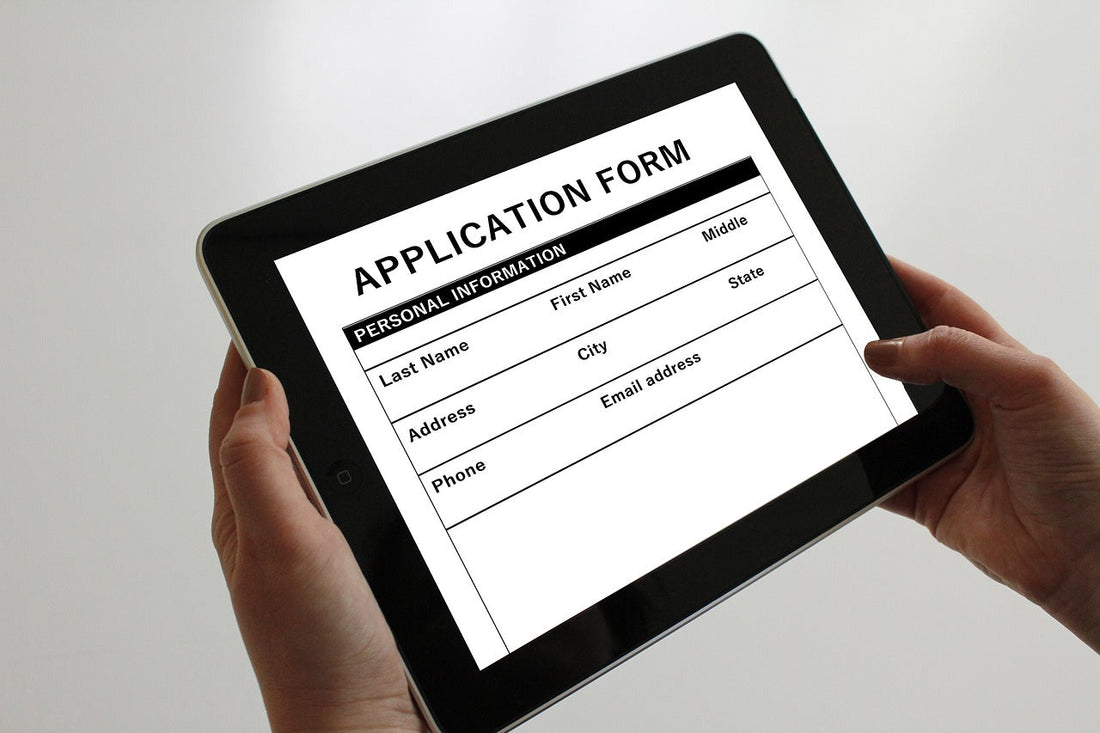
The application itself can be informal – a simple letter outlining your request is often sufficient. Some organizations also provide a specific form for this purpose. It's also important to include a cost estimate or a concrete offer for the desired table so that the costs can be realistically assessed. If you are employed, it may also be helpful or even necessary to include confirmation from your employer regarding your current workplace situation – especially if the workstation is permanently set up for you and there are no ergonomic alternatives.

Tips for a successful application
For a successful application, there are some important tips that will significantly increase your chances of approval. Make sure to formulate your application as specifically as possible: Explain why you need the height-adjustable desk and how it will benefit your health. The more understandable your request, the better your chances of success.
Support your request with relevant medical documentation. A precise diagnosis, a clearly worded medical certificate, and, if applicable, a report of findings will help the reviewing body to realistically assess your needs. Also, seek support from experts: company doctors, ergonomics consultants, or social workers have experience with such applications and can assist you with the wording or compilation of your application.
Submit all documents completely and together – incomplete applications almost always lead to delays or requests for additional information. And if your application is rejected: file an appeal. Many applications are only approved on the second attempt after a renewed review. So it's worth persevering.
Conclusion: Invest in your health!
An adjustable-height desk is a worthwhile investment in your health. In many cases, you don't have to bear the costs alone. Health insurance companies, pension funds, employment agencies, or your employer can provide a subsidy if it's medically necessary. It's important to find the right contact person and prepare your application thoroughly. With a little patience and the correct documentation, your chances of having the costs covered are very good.
Disclaimer: This article is for informational purposes only and does not constitute legal advice. All information is provided without guarantee.


